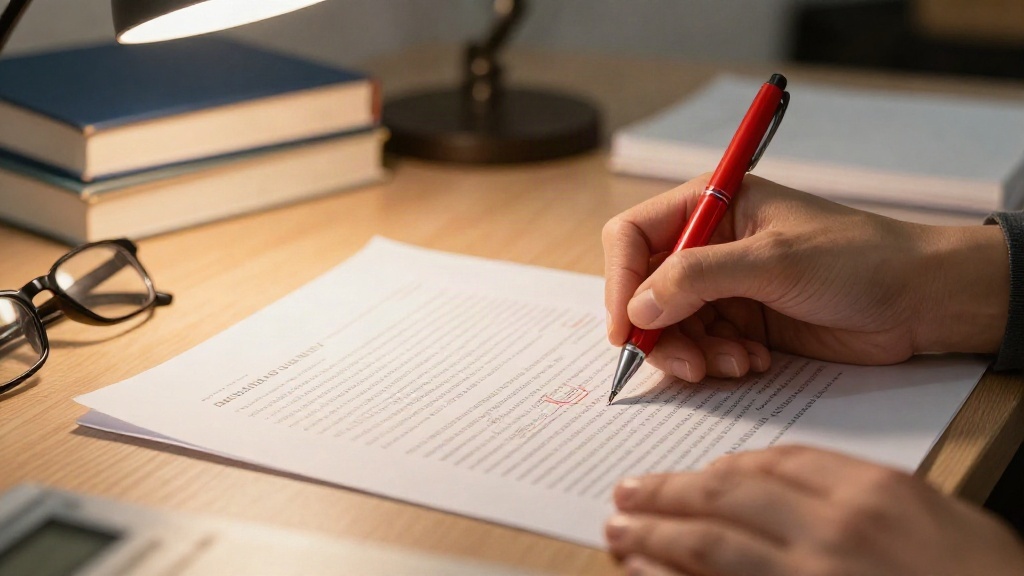


Every student has met the literature review that never gets interesting: a pile of summaries stacked under headings, sentenced to the fate of never being read. Yet the same assignment, in the hands of a student who understands what a review is for, becomes the most intellectually satisfying piece of the whole course — a live argument about what...
What the Assignment Is Really Asking For
Look closely at the prompt. "Summarize the literature on X" asks for a report; "evaluate," "critique," "analyze," "assess," "synthesize," or "identify gaps" asks for a judgment. Even when the prompt says only "review the literature," nearly every instructor's rubric reserves the top band for critical engagement — moving beyond "Author A found X, Author B found Y" to "the literature collectively reveals… and fails to resolve…".
Here is the framing that unlocks everything: a literature review is not an annotated bibliography and not a research paper's "background" — it is an argument about the state of knowledge in a field. Your core claim is not about your own study (there may not be one); it is a claim about the scholarship itself: the field has converged on X, is split on Y, has overlooked Z, and the next question is W. That single reframe converts the assignment from reporting duty into genuine analysis.
Step 1: Read the Sources Twice — Once to Understand, Once to Suspect
The sympathy pass: read each source to grasp its claims, evidence, and design. Then the critical pass, where you interrogate it with ten questions:
- What is the author's actual claim, stripped of hedging?
- What evidence supports it — and is that evidence adequate to the claim?
- What was the sample/population, and can the conclusions travel beyond it?
- What methods were used, and do the methods fit the question? (A survey cannot prove causation; a lab study may lack ecological validity.)
- What does the author assume without arguing?
- What alternative explanations are never considered?
- How old is the evidence — and has the field moved since?
- Who funds/published it, and does that context matter for its claims?
- What does the reference list not cite that it should?
- If everyone believed this paper, what would be lost?
Take notes directly as answers to these questions, per source. By the end, you will have the raw material of a critique without writing a single paragraph.
Step 2: Classify Your Sources by Their Role, Not Their Topic
Mere summaries result from treating every source equally. A critique treats sources as players in a drama, each with a role:
- The founders — early studies that set the framing; critique their assumptions, because everyone after them inherited them.
- The heavyweights — the most-cited, field-defining work; engage with it first and in depth.
- The challengers — studies that contradict or complicate the consensus; these are your plot twists.
- The methodologists — papers about measurement/design; use them to judge the empirical quality of the rest.
- The orphans — under-cited findings that deserve more weight; championing one makes you an analyst, not a reporter.
- The chaff — sources too weak or tangential to carry weight; demote or drop them entirely.
Deciding a source's role is an act of judgment — which is precisely what separates summary from critique.
Step 3: Organize Around Threads and Tensions, Not Authors
The summary-shaped review is organized by author ("Smith (2022)… then Jones (2023)…"), which guarantees an incoherent pile. The critique-shaped review is organized by analytical threads — themes, mechanisms, methodological approaches, or controversies — that cut across authors. Build your outline around four or five threads, each named for the question it addresses:
- "What interventions actually change study habits?" (intervention thread)
- "The measurement problem: self-report vs. observation" (methods thread)
- "The unresolved debate: motivation as cause or effect" (tension thread)
- "What the European studies add that the U.S. studies miss" (scope thread)
Within each thread, move from the strongest or foundational work to the challengers, and end the section with a mini-verdict: what the thread establishes, what it leaves open. Those mini-verdicts are your synthesis — and they are what the rubric's top band is looking for.
The Paragraph Architecture of a Critique
Every body paragraph should alternate reporting and judging in a visible rhythm. A reliable pattern:
Sentence 1 (topic sentence): name the claim or tension, not the author. "The literature agrees that feedback improves revision, but it is sharply divided on which feedback works." No author named — that is a claim-level topic sentence, the signature of analysis.
Sentences 2–4 (report): present the relevant evidence, attributed. "Nguyen (2023), studying 400 first-year writers, found directive comments produced larger revision gains than open-ended questions. Conversely, in a smaller longitudinal study, Alvarez (2024) reported the opposite."
Sentences 5–6 (judge): evaluate the evidence, not just describe it. "Nguyen's sample was dominated by composition majors, who may respond differently to directive feedback than general-education students; Alvarez's design, though smaller, tracked revision quality across a full semester, giving its findings greater ecological weight."
Sentence 7 (verdict): what does this leave for the field? "The disagreement therefore reflects a population question that neither study resolves alone, and it defines the gap the next wave of research should close."
That cycle — claim, evidence, judgment, verdict — is the analytical critique, paragraph by paragraph. If a paragraph contains no judgment sentence, rewrite it until it does.
The Critique Vocabulary That Signals Analysis
Your verbs and frames should constantly announce that you are evaluating, not merely reporting. Build a toolkit:
- Praise with precision: "The central contribution of X is…", "X's design is the field's gold standard for…", "No study before X had…".
- Critique with charity: "Where X's account weakens is…", "The argument would be stronger if…", "X's conclusion outstrips its evidence, which shows…".
- Locate gaps: "What this line of research has not addressed is…", "Curiously absent from the literature is…", "The field's reliance on… leaves unexamined…".
- Adjudicate: "Taken together, the balance of evidence favors…", "The apparent contradiction dissolves once…".
Avoid the tell-tale summary verbs of the bored review ("X discusses…", "X talks about…", "X mentions…"). "Discusses" is the single most expensive word in academic writing; every scholar who "discusses" something could be demonstrating, challenging, refining, or undermining it instead.
The Gap Paragraph: The Critique's Payoff
Every strong analytical review contains one passage — often near the end of the body — where you name the literature's collective blind spot. This paragraph is worth disproportionate grade points. Structure it as:
- Acknowledge the literature's strengths (so the critique is credible).
- Name the gap precisely: "What unites nearly all of these studies is their reliance on single-institution samples; no multi-campus replication exists to test whether the effect generalizes."
- Explain why the gap exists: "This pattern likely reflects funding incentives and the ease of convenience sampling rather than theoretical choice."
- State the consequence: "As a result, the field's central claim rests on evidence that may be an artifact of where it was collected."
The gap paragraph is where your review stops being a survey and becomes a contribution — it tells the field what it should do next, and professors reward that audacity when it is evidence-backed.
Common Ways the Critique Goes Wrong
- Criticism without comprehension: trashing a study you have not accurately summarized. Fix: state the strongest version of the source before attacking it.
- Ad hominem lite: critiquing the researcher's motives instead of the evidence. Fix: critique designs, data, and logic; never authors.
- The false resolution: forcing a synthesis the literature does not support. Fix: it is fine (and often truer) to say the debate is unresolved and name why.
- The orphan judgment: verdict sentences with no evidence behind them. Fix: every judgment sentence cites the evidence it rests on.
- Review-shaped like the textbook: marching through topics chronologically or by author surname. Fix: reorganize by threads and tensions.
The Revision Pass That Confirms You've Made It
Before submitting, run the stance audit:
- Highlight every paragraph's last sentence. Does each state a judgment, a verdict, or a gap? If a final sentence merely reports, the paragraph is summary-shaped — rewrite it.
- Count judgment verbs (challenges, undermines, refines, outstrips, overlooks) per 500 words. Fewer than three means you are still narrating rather than evaluating.
- Find your gap paragraph. If there is none, add one — it is the assignment's highest-value paragraph.
- Check each topic sentence. If any begins with an author's name followed by a reporting verb ("Smith found…"), consider flipping it to claim-first structure.
Conclusion
The "boring" literature review dies the moment you change who holds the pen. A reviewer who merely reports stands in the sources' shadow; a reviewer who critiques stands in their light — judging evidence, weighing designs, naming gaps, and pointing the field forward. Read twice (understand, then suspect), classify sources by role, organize by threads and tensions, run the claim–evidence–judgment–verdict paragraph cycle, and write the gap paragraph with confidence. The rubric's top band is not reserved for genius; it is reserved for students who treat the literature as a conversation they are entitled to join. Walk into the conversation, and the assignment stops being a chore and starts being the best writing you do all term.
Your next step: Open your source list and do the role-classification pass right now — label each source Founder, Heavyweight, Challenger, Methodologist, Orphan, or Chaff. If you find yourself with a pile of "Heavyweights" and no "Challengers," you have just discovered why the field's debate is invisible in your draft — and exactly which sources to hunt for next.